The legendary Joey Chestnut had his hot dog eating contest interrupted today by a protestor. He managed to get the get in a headlock and keep plowing ahead with his hot dogs at an amazing rate. He took the championship with 64 hot dogs.
Sometimes in SEO, you need to roll with the punches as well. That protestor is the equivalent to a Google algorithm update, but as long as you stick to sound strategies, you will still come up with the win.
Hit us up at https://oimarketing.ca for any questions about web design or SEO.
Forget the complicated stuff. With the four secrets to marketing that we’ve looked at so far, you can blow the competition away and take your business to higher levels of success.
These strategies are simple and will not cause you to dig too deep into your pockets. However, they can provide excellent results when used correctly.
This is some funny stuff. As a huge Hook fan, it is clear that his roll is far superior, but honestly I've never seen someone fold as well as that lady. It is a hard decision. Where do you stand?
This is some funny stuff. As a huge Hook fan, it is clear that his roll is far superior, but honestly I've never seen someone fold as well as that lady. It is a hard decision. Where do you stand?
Constantly we see people try to do their own SEO and it backfires entirely. Whether it is the technical aspect of their website, trying to write generalized content on their blogs or paying someone off Fiverr to generate toxic backlinks for them. It is a dangerous world for your website out there and it is important to hire a professional to help.
Constantly we see people try to do their own SEO and it backfires entirely. Whether it is the technical aspect of their website, trying to write generalized content on their blogs or paying someone off Fiverr to generate toxic backlinks for them. It is a dangerous world for your website out there and it is important to hire a professional to help.
This is me trying to do sales. I've won the worst salesperson of the year for 4 years running, but whose counting, right? Yes, I am abyssmal at it, which is why I rely almost entirely on Word of Mouth, which is actually working out quite well.
Did you notice any changes in organic traffic already?
Google's latest update, the June 2022 core update rolling out as we speak. Ranking reassessment is completely normal with algo updates, but it will cause some fluctuations. We believe this is a relevancy update and they are rolling back a few of their targeting changes due to their current court preceedings. Either way, keep that quality content coming and try to avoid AI written materials.
Not much is known about the update for now. Still, it is crucial that you keep rolling out regular content with quality at the forefront, revising old content and maintaining a minimum weekly update to your Google Business Profile.
If your Google traffic dips or spikes, make sure to hold the line until after the algorithm change is complete.
Businesses don't have to be on every single social media platform.
A business can identify which social media platforms its customers are using and focus its efforts on those platforms.
Additionally, a business can use social media tools to track conversations about its brand online and respond accordingly. Data is integral! @Hootsuite is pretty solid for following brand mentions. Do you have a favourite tool?
For digital marketers, website accessibility is becoming more and more critical.
"Making websites useable by persons with disabilities," according to the World Wide Web Consortium, or W3C.
A website that functions effectively in numerous browsers and with screen readers can significantly increase the number of prospective clients in your target market. One of the most obvious is called ALT (alternative) text for imagery, and if a screen reader can't describe to someone who is visually impaired what they are seeing on a website; they will simply leave. Google will also recognize if you have made your website accessible, so make sure to check these things.
The honest answer to a search for the best craft beers in the Fraser Valley is that nobody has poured enough of them in one room to rank them, and this site is not going to guess from can labels. What can be checked is the map, so this page sets out which breweries sit in which valley towns, names the ones that have closed since the last version of the article, and says where the region's hop growing fits into an afternoon you actually plan. That is a more useful way to read the valley than a ranked list of names.
How To Use This Map Before You Drive
Define the valley before you read any list, because the regional district runs from Abbotsford and Mission east through Chilliwack, Kent and Hope while everyday usage adds Surrey, Delta and both Langleys.
Treat every brewery status as perishable, because taps close, leases run out and one valley town lost its only brewery in July 2026.
Check the place names before you drive, because two breweries routinely filed under Burnaby are actually in Vancouver and Surrey and a third listed as Burnaby was in Port Moody and has since closed.
Confirm the shipping rules at the counter rather than online, because the national direct-to-consumer agreement was signed in July 2026 and the provincial system is not due until February 2027.
What Counts As The Fraser Valley
The Fraser Valley Regional District runs from Abbotsford and Mission east through Chilliwack, Kent and Hope, which is the strict answer, while everyday usage pulls Surrey, Delta and both Langleys into the phrase too. That difference decides whether a list is worth reading, because an article about the valley that never mentions Abbotsford, Chilliwack, Mission or Hope is a Metro Vancouver list wearing someone else's name. The version of this page that ran for years did exactly that, and it put three breweries in cities they were never in while doing it.
The Towns And What Is In Them
Langley holds the densest cluster in the region and the BC Ale Trail lists it with addresses, which makes it the easiest place to check. Five Roads Brewing is at 6263 202 Street in Fort Langley. Camp Beer Co works out of 19664 64 Avenue and Trading Post Brewing out of 20120 64 Avenue, a couple of minutes from each other, while Dead Frog, Locality, Brookswood and Farm Country are spread around the township rather than stacked on one street. The Barley Merchant is a taphouse rather than a brewery, KPU's Brew Lab pours on the Langley Bypass, and Smugglers Trail Caskworks and Trails End round out the list.
Old Yale is the name that covers both of the big valley cities, with a brewpub at 33738 Laurel Street in downtown Abbotsford and the larger plant at 44550 South Sumas Road in Chilliwack, where the taproom reopened in September 2026 after a renovation closure that had it shut for most of that year. Field House has rooms in Abbotsford on West Railway Street and in downtown Chilliwack on Woolly Dog Alley, Sidekick is at 45530 Vedder Mountain Road, and Farmhouse Brewing brews on Lickman Road in the same city.
Mission lost HUBCo Brewing on 4 July 2026 after four years in a downtown space, which leaves Mission Springs Brewing on Oliver Street as the town's own brewery. Mountainview sits in Hope on Old Hope Princeton Way, which is as far east as this page reaches. Barnside in Delta belongs here for a different reason, since the person who runs it chairs the association that speaks for BC hop growers.
Three Place Names Worth Getting Right
Central City and Storm are routinely filed under Burnaby, and neither belongs there. Storm has been at 310 Commercial Drive in Vancouver for decades and the BC Ale Trail calls it the city's longest-running craft brewery. Central City is in Surrey on Bridgeview Drive and is the cautionary one, since the company obtained creditor protection on 21 November 2024 with roughly 63 million dollars in liabilities, was bought by Mark Anthony Group in early 2025, and the site now trades as Homefield Brewery, whose own page lists the tasting room as closed.
Moody Ales was recommended as a live Burnaby brewery and was actually in Port Moody on Murray Street, where it announced on 4 December 2025 that it was closing after eleven years, poured its last on the 14th, and left the space to North Point Brewing. That is the shape of the problem with any valley list written more than a season ago, and it applies to this one. A brewery is a business with a lease, and leases run out.
The claim that North Vancouver leads Canada in breweries per capita is not supported by anything. A census-based ranking published by The Growler put Pemberton first among BC municipalities at roughly one brewery per 1,287 residents, Port Moody at one per 6,710 and Victoria at one per 8,792, while Victoria's own tourism material claims the title only among major cities. Any figure of that shape depends on where the boundary is drawn and on when somebody last counted, which is why no number like it appears elsewhere on this page.
Hops Are The Valley's Other Crop
Hop growing is the most interesting thing in the region's brewing history and it is mostly a Chilliwack and Sumas Prairie story. John Broe planted the valley's first commercial yard at Aldergrove in 1884, Henry Hulbert followed with fifty acres at Sardis in 1892 after learning the work in Kent, and British Columbia had become the largest hop-growing region in the British Commonwealth by the early 1900s. The plantings consolidated through the twentieth century and then vanished, with the last of the big Chilliwack yards ending when the land was sold in 1997, and Topp's Hops replanting on the Topper family farm in Abbotsford in 2014.
How To Choose A Beer You Cannot Rank
Ask what came out of the tank most recently, because a valley taproom pouring its own fresh cans is offering something a shelf three hundred kilometres away cannot match.
Ask which beer on the fitted line the person behind the bar drinks themselves, and take the half pour instead of committing to a pint of a style you already know you dislike.
Ask for the lager if you want to judge a brewery fairly, since a clean pale lager hides nothing and a heavily hopped ale forgives a great deal.
Frequently Asked Questions
Is Langley part of the Fraser Valley?
In the everyday sense, yes, and the Township, Fort Langley and Aldergrove are usually described that way. On a map of local government, Langley sits inside Metro Vancouver and the Fraser Valley Regional District begins to the east, so a strict answer depends on whether the person asking is planning a drinking route or looking for the right municipality to phone.
Which valley brewery makes the best beer?
This page will not say, because the question needs a room, a flight of glasses and a notebook rather than a search page. A ranking copied from another website is a copy of somebody's guess, and the breweries in the valley change their lineups often enough that a list of best beers is out of date before it is printed. The questions above at a bar will get a better answer in one afternoon.
Can I order Fraser Valley beer to another province?
A brewery's own checkout page is the only authority worth trusting here. Nine provincial premiers signed the final agreement on direct to consumer alcohol sales on 21 July 2026, which opens the legal room for a BC brewery to ship to a home in another signing province, and British Columbia has said its full system for all beverage types is planned for February 2027. Until that system exists, the answer at the taproom counter is the real one.
Do any of these breweries grow their own hops?
Some buy from neighbouring yards and a few sites have bines on the property, but farming hops and brewing beer are different work under different licences, so a taproom near a hopyard is not automatically a brewery that grows what it puts in the kettle. If a brewery does use BC cones in a given beer, the people behind the bar will usually describe the farm straight away.
Drink The Fresh One Where It Was Poured
The valley's beer is worth an afternoon for the same reason it is impossible to rank from a desk. A pale ale poured where it was canned is fresher than anything that has crossed the province, the person who made it is often in the room, and the list changes with the batch. Pick two taprooms from the addresses above, check that the one you are driving to is open on the day you arrive, and treat every recommendation here as a place to start rather than a verdict.
Three tasters who like each other will usually agree on which beer of the night is best and rarely agree on what the number means, and the second half of that sentence is the part worth keeping. An archived tasting night in this blog's own records had three British Columbia beers in it, and Kyle, Matt and Mike each scored them out of five. All three ranked the flight in the same order, from the Vancouver Island imperial red at 3.2 up to a Surrey imperial pale ale at 4.4 or 4.5. That ranking is the least interesting thing in the entry. The notes underneath the scores, and what has happened to two of the three breweries since, are the reason to reread the night.
What The Panel Recorded
The entry lists three opinions rather than declaring a winner, which is the honest way to publish a group tasting. Nobody weighted the scores, nobody dropped the low mark as an outlier, and the same three people worked through all four beers in the same order on the same night. That leaves the gap between tasters visible, and on every beer the gap is small enough that the result never came down to one dissenting glass.
Beer
Kyle
Matt
Mike
Gap between tasters
Thirty Years Imperial Red Ale, Vancouver Island Brewing
3.2
3.0
3.2
0.2
Sap Sucker Maple Porter, Fernie Brewing
3.9
4.2
3.7
0.5
Red Racer Imperial India Pale Ale, Central City
4.5
4.4
4.4
0.1
Bootlegger Ale, brewery not recorded
3.2
3.3
3.4
0.2
Thirty Years Imperial Red Ale, Vancouver Island Brewing
The panel had built the evening around this one and came away mildly disappointed, which is what a 3.2 from three friendly tasters usually means. The note describes a beer caught between sweetness and hops, with what reads like molasses doing the bridging, and the verdict was that the addition changed the flavour without improving it. Kyle's line, a solid start and a syrupy finish, is the whole review. Vancouver Island Brewing made it in Victoria and sold it as a bigger, well-hopped relative of the pale ale that had been the brewery's staple for years.
Two things have moved since. The Government Street brewhouse closed on 1 November 2024 after a 35 per cent rent increase, and production moved across to Phillips Brewing, so the Victoria address in the notes is a place with a history rather than a working plant. The vibrewery.com address the notes link has been superseded by vibrewing.com, where the company now publishes.
Sap Sucker Maple Porter, Fernie Brewing Co
This was the beer nobody expected to enjoy, poured for a panel that rarely reaches for a porter, and it drew the widest spread of the night at 3.7 to 4.2. The notes record a dark glass, gentle carbonation, and caramel and coffee running through it with the maple sitting behind the roast rather than on top of it. Matt's verdict, that a hint of maple makes it a genuinely Canadian beer and a good thing to pour over pancakes in the morning, is not something you can argue with. Two things to have straight if the name comes up: Fernie Brewing is in Fernie, in the East Kootenays, and Sap Sucker has been retired and is no longer brewed, so the seasonal the panel waited for is an archive item now.
Red Racer Imperial India Pale Ale, Central City
The top marks of the night, 4.4 and 4.5, went to a beer the panel admitted it had not expected from Surrey. The note is enthusiastic rather than careful: sweet malt and hops arriving together, and a finish long enough that all three tasters called it the best beer they had scored to that point. The brewery's own blurb promised grapefruit, tangerine and mango from whole-leaf hops and a long maturation before release. Mike's summary, smell check, taste check, alcohol check, it has it all, is not analysis, but it is honest about what a first great experience feels like.
Central City Brewers & Distillers has since gone through a change larger than a rebrand. The company ended up in a court-ordered sale, and Mark Anthony Group completed the purchase in February 2025. The Surrey plant that made the beer now sells it under the Homefield name, listed at Red Racer at Homefield Brewery, so the beer outlived the company name that made it.
The Beer Nobody Wrote Anything About
The panel scored a fourth beer, Bootlegger Ale, and filed three marks between 3.2 and 3.4 with no tasting note and no brewery recorded against it. That row is the most useful line in the whole table, because it shows what a score looks like when it carries no information. Nobody reading it later can tell whether the beer was fine, forgettable or flawed, and the closeness of the three marks only proves that three people agreed about something none of them bothered to describe.
What A Panel Score Can Tell You
Three people in one room produce an order you can trust more than the numbers on it, because that order survived a scale everybody uses badly. The absolute marks are another matter. The same beer can move half a point for the same drinker depending on the glass, the temperature and the position it was poured in, and a 3.2 in a flight where the top beer reached 4.5 mostly means third of three rather than a bad beer. Read a panel score for the ranking and the reasons attached to it, then let the decimal go.
What Happened When Everybody Became A Rater
Untappd does the same job at a scale no panel can reach. You log what you are drinking, rate it out of five in half-point steps, and leave the entry where your friends can see it. The difference is not that strangers are careless, since most of them are not, but that a crowd averages out everything a panel shares. Three tasters in one room had the same bottles at the same temperature with the same expectations going in, while a large set of check-ins mixes warm glasses, a dirty line, a long flight and two different production runs of the same label. A high crowd score is a weak argument that a beer is good. A crowd score that collapses against its own style is a decent argument that something is wrong with the can you are about to buy.
How To Run A Better Panel Night
Put the bottles in paper bags or pour identical samples into unmarked glasses, since a label changes a score before the first sip arrives.
Let everybody write a number before anybody talks, because the first confident opinion in the room quietly sets the range for the rest of the night.
Score each beer against its own style rather than against the last glass, which is how a very good porter loses to an imperial IPA on the same table.
Write one sentence with every score, because a number without a reason is the row nobody can use later.
Include one beer nobody in the group would order, which is where panel nights produce surprises more often than a flight of favourites does.
Keep the scale simple at half a point a time and stop arguing about whether a 4.2 is really a 4.
Frequently Asked Questions
Is a five-point or a hundred-point scale better for scoring beer?
Five points in half-point steps is enough for three people in a living room, because it forces a decision without pretending to a precision nobody has. A hundred-point scale lets two tasters disagree by four points about the same glass and both be reasonable, which makes the average meaningless. The extra resolution only earns its keep when one person scores the same style repeatedly over a long stretch.
Does agreement between tasters prove the score is right?
Agreement says the panel is stable, not that the number is true, and this flight is the example. Three people who tasted together, in the same room, from the same bottles, landed within half a point on every beer, which is what it looks like when tasters influence each other and share reference points. Consistency is a property of the group rather than a measurement of the beer.
Should a brewery care about a low panel score?
It should care about the sentence attached to it. A 3.2 gives a maker nothing to work with, while a note saying the added sweetener left the finish heavy points at an exact decision in the recipe, and that is the kind of feedback a drinker rarely puts on a public rating feed.
Order, Reason, Then Ignore The Decimal
If you want to keep the useful part of a panel night, publish the ranking and the reasons and let the averages go. Two of the three breweries in this flight have changed out of recognition since the glasses were filled, one of the beers is no longer made, and the only thing in the record that still holds up is what three people said the beers tasted like. That is worth more than a decimal, and it is the part that outlives the brewery.
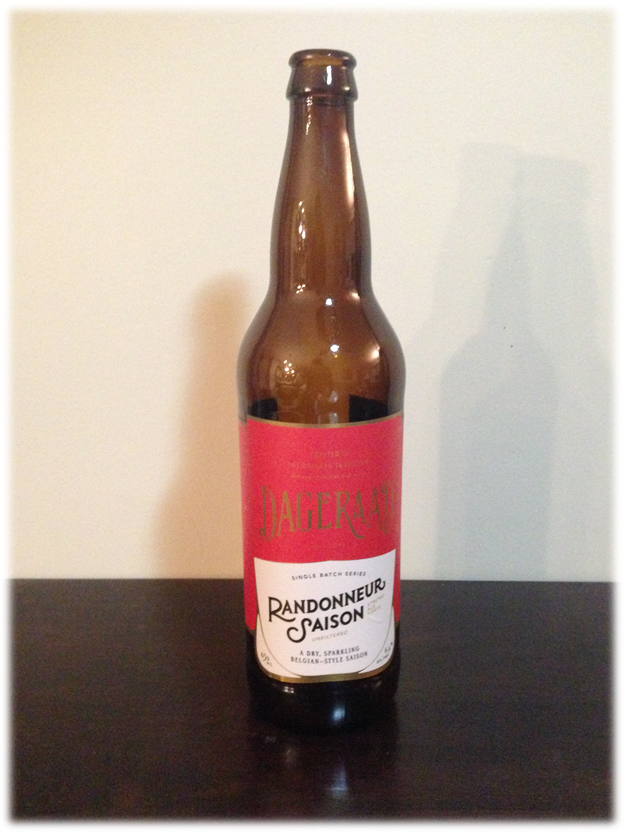
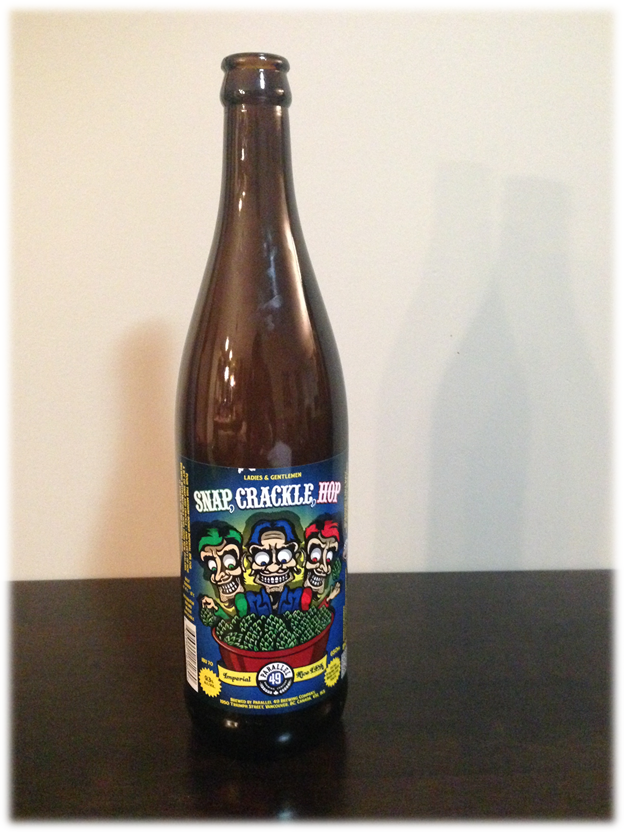
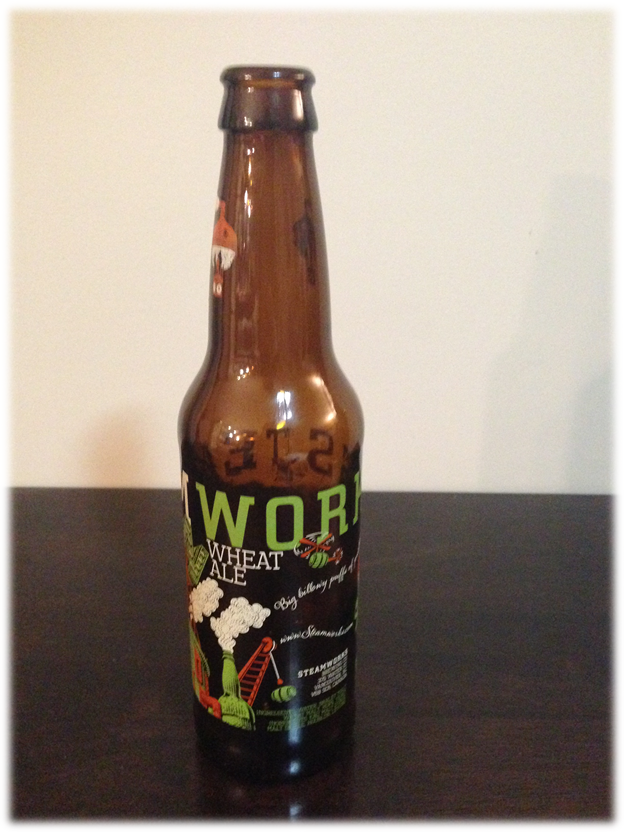
Four bottles went on the table at the Council's fourth meeting, and the honest summary is that three of them were good beer and one was a disappointment the group refused to inflate. Dageraad's Randonneur Saison from Burnaby took 3.9 out of 5, Parallel 49's Snap, Crackle, Hop from Vancouver took 3.8, Steamworks Wheat Ale took 3.3, and Pray for Snow, a winter ale from Oregon, finished at 2.7, which the notes called a generous number at the time and nobody raised afterwards. Choosing four bottles that four people will disagree about is the easy half of a night like this. Writing the disagreement down is the part that is not easy.
The rules were the ones the group has kept since the first meeting. Each member brings one beer, everybody tastes before anybody argues, and a score goes on the sheet once and cannot be revised afterwards. There were four tasters that evening, which is why the columns below are worth as much reading as the averages: the wheat ale ran from 4.0 at one end of the table to 2.8 at the other, while the four numbers on the saison sat inside a single point of each other.
Randonneur Saison, Dageraad Brewing, Burnaby
Kyle's pick was the second release in Dageraad's Single Batch Series: unfiltered, bottle conditioned, and labelled in one line as a dry, sparkling Belgian-style saison. The brewery's suggestion at the time was seafood or salad, and the table agreed on the seafood half. Peppery, hoppy and bone dry, with enough carbonation behind it to make the finish feel like something out of a soda fountain, it was the best beer of the night and still finished with a 3.9 average, much to the chagrin of the man who brought it. Kyle's own line was that it may not be the season for saison, but it was incredible, and his 4.3 was the second highest number anybody wrote down that evening.
One style note belongs beside this bottle, because the sheet got it backwards and a BC reader will notice. A gose is not a Belgian farmhouse ale. It is a German wheat beer, soured in the kettle and usually seasoned with salt and coriander, and the Belgian farmhouse beer in that comparison is the saison itself, exactly as Dageraad prints it on the label. The mix-up is a forgivable one from a table, since both beers are pale, dry and heavily carbonated, but the sourness in a gose comes from bacteria while the pepper in a saison comes from the yeast, and that difference is the whole reason the two taste nothing alike.
Snap, Crackle, Hop, Parallel 49 Brewing, Vancouver
Matt's pick was an imperial IPA brewed with flaked rice to keep the body light and push the New Zealand Motueka hops out in front, and the brewery put the alcohol at 9.3 percent, which the label repeats on the band under the three cartoon heads. Peach and mango arrived first, then a caramel layer and a hop bite that stayed put, and the rice did what the brewery said it would by adding dryness rather than a new flavour. The group's own warning was that a few of these will make the walk home difficult, written down by people who fully intended to ignore it. The average came to 3.8, with Matt's 4.4 the highest score he had given any beer to that point and nobody else getting above 3.8.
Wheat Ale, Steamworks Brewing, Burnaby
Mike brought the bottle that started the argument, and the argument was with the front label. He had been through the brewery more than once, so he knew what he was buying and the rest of the table did not. The beer is called Wheat Ale, and Steamworks' own description of it says South German style hefeweizen, which is the same thing said more precisely: hazy gold, thick white head, banana, clove and a hint of bubblegum. The group found the banana, the yeast and a spice edge, agreed it was a decent beer, and then disagreed about everything else. It finished at 3.3 with the widest spread of the night, Kyle at 4.0 and Tim at 2.8, which is what happens when four people taste for the beer they each wanted. Mike's own verdict was that Steamworks turns his crank, printed beside his own 3.3. The brewery grew out of a Gastown pub and has run its brewhouse in Burnaby since 2013, so the city on this sheet is years out of date.
Pray for Snow Winter Ale, 10 Barrel Brewing, Oregon
Tim picked a winter seasonal at 7 percent and the table could not rescue it. The pour was dark amber browning at the edges and looked full-bodied before it hit the tongue, and the sweetness arrived as syrup rather than caramel, with a heavy finish that most of the room expected to pay for the next morning. The average was 2.7, described in the notes as generous, and Tim's line was that if this is what winter has to offer then he is not praying for snow. Whether the beer still exists anywhere is a fair question and not one a sheet from 2014 can answer.
Two facts belong beside that score. The brewery is from Bend rather than Portland, and it was sold to Anheuser-Busch InBev in October 2014, the autumn this bottle was poured, which is the kind of change that turns a craft recommendation into a different product wearing the same name. All About Beer reported it at the time.
The Scores From That Night
Four tasters, four beers, one sitting, and no revisions after the fact. The averages are the ones quoted above, and the columns are where the night actually lives.
Beer
Kyle
Tim
Mike
Matt
Average
Randonneur Saison, Dageraad
4.3
4.2
3.6
3.4
3.9
Snap, Crackle, Hop, Parallel 49
3.6
3.8
3.4
4.4
3.8
Wheat Ale, Steamworks
4.0
2.8
3.3
2.9
3.3
Pray for Snow, 10 Barrel
2.7
2.3
2.1
3.0
2.7
Where These Breweries Stand
Dageraad is still brewing in Burnaby, which makes the saison the one bottle here that a reader can still go and find from the brewery that made it, if the Single Batch Series has moved on since. Parallel 49 was last confirmed operating in Vancouver in 2025. Steamworks still runs the Burnaby brewhouse that grew out of its Gastown pub. 10 Barrel has changed hands, and a winter seasonal from 2014 is not a shopping tip. The Council ran the same format again at its New Year meeting, written up as the New Year tasting, where a golden ale brewed with pears took 4.3 and a strong Belgian-style tripel split one taster from three.
Why The Low Score Is The Useful One
The 3.9 and the 3.8 will age well, because in both cases the brewery said plainly what the beer was and the table found it. The 2.7 is the entry worth keeping. A group that had already handed out three respectable numbers that evening could have written a kind line about an Oregon winter ale and nobody would have blinked, and instead they printed the number they meant and labelled it generous in the same breath. If you keep a tasting sheet with friends, copy that habit rather than the scores: write one line per beer before the conversation starts, keep the spread visible next to the average, and leave the low numbers in place, because a low number is the only part of the sheet that tells a reader something the writer did not already have to believe.
Four bottles went on the table in the third week the Council sat down to score its own picks, and nobody had much reason to go home embarrassed. Three came from BC breweries and the fourth came from a homebrewer in Langley who had never sold a drop of it. Angry Scotch Ale from Russell Brewing in Surrey finished at 3.5 out of 5, Hoyne's Big Bock from Victoria took 4, Longwood's The One That Got Away from Nanaimo took 3.7, and the pumpkin porter went onto the sheet as a bonus pour with dashes in every column instead of numbers. A 3.5 from three drinkers who bought their own beer is not an insult, and that is the promise in the title.
The method has not moved since the first write-up. Each member brings a bottle, everybody tastes before anybody talks, and a number goes on the sheet once and cannot be revised afterwards, which is why the spread inside one beer is worth more reading than the average printed beside it. This week that spread was narrow on all three scored bottles, and the highest mark the group had handed out to that point went to a beer it did not think was much like a bock.
Angry Scotch Ale, Russell Brewing, Surrey
Russell bottled this strong Scotch ale in a 650 mL brown glass bottle at 6.6 percent and sold it in the language of the old Scottish shilling grades, promising a long boil and dark fruit and toffee from the roasted malt. The Council found the toffee and very little of the intensity the name is reaching for. It was smooth enough that a second bottle sounded pleasant rather than heroic, which is the one thing a Scotch ale rarely manages. Kyle's line was that it was smooth, drinkable and enjoyable, but only got the silver medal from him, and Tim and Tyrone landed at 3.5 and 3.2.
The bottle did better with outside judges than it did at this table. The official 2010 World Beer Cup results list it under the brewery's fuller name, Russell Wee Angry Scotch Ale, taking bronze in the Scottish-Style Ale category against 29 entries. That is a useful thing to know about a score of 3.5, because it means the beer was not flawed and not bad, only not what three people at that table wanted that night.
Big Bock, Hoyne Brewing, Victoria
This was the second Hoyne bottle at the table and the one that produced the best number on the sheet: 4 out of 5, with Kyle and Tyrone both at 4.0 and Tim a tenth of a point behind. The pour was a deep red amber with sweet malt and floral hops carrying from the first nose through to a clean, earthy finish, plus a light fruit layer nobody had expected. The tasters were clear that it was nothing like a traditional bock and equally clear that they did not mind. The rooster on the label is a leftover from a longer name, since the brewery first called the beer Big Cock Bock and the BC Liquor Distribution Board rejected it, and Big Bock is what came after.
The label copy still leans into the bird, in a passage about a majestic rooster unafraid to strut his colours and proclaim his dominion while the flock pretends not to listen. Tyrone's complaint was the practical one, which was that a beer this good asks you to go looking for it, and putting in the effort is not something a tasting group should have to do on a weeknight.
The One That Got Away, Longwood Brewpub, Nanaimo
Longwood built this red wheat ale around a West Coast tuna fishing derby out of Bamfield, put half the grain bill into wheat, added a generous dose of crystal malt, and told people to drink it with seafood. The label in the photograph makes the same argument with a hooked fish. The Council got a slight red hue, a subtle sourness, a bitter edge that a note of banana kept from getting aggressive, and a head that did not turn up to the party. Tim's verdict was that it was full of colour, a little yeasty, ever so sweet and not worth mourning, and the 3.7 average put it in the middle of the three.
The Bonus Pour: A Homebrew From Langley
The fourth bottle did not come from a brewery at all. Greg Clark of Langley had brewed a chocolate pumpkin porter called Jack-o-Heed and brought it to the meeting, and the group poured it as a bonus and entered dashes rather than scores, which is the right call when the only source of a beer is the man who made it. The body looked as thick as Guinness and went down far more smoothly than that description promises, with pumpkin running quietly underneath and a roasted chocolate finish that stayed put long after the glass was empty. It was the one bottle nobody at the table had a complaint about, and one unscored sample is not enough to make more of than that.
The Scores From That Week
Three tasters, four bottles, one sitting, and no revisions after the fact. The averages are the ones quoted above, and the columns are where the disagreement lives.
Beer
Kyle
Tim
Tyrone
Average
Big Bock, Hoyne
4.0
3.9
4.0
4.0
The One That Got Away, Longwood
3.6
3.7
3.8
3.7
Angry Scotch Ale, Russell
3.9
3.5
3.2
3.5
Jack-o-Heed, homebrew
-
-
-
Not scored
Where These Breweries Stand
Two of the three names on this sheet are still pouring and one is not. Russell closed its Surrey brewery and tasting room in April 2026 and sold the equipment, and the company has since moved to contract brewing, so the address printed on the label is not a place you can visit any more. Surrey was also the closest of the three to where the group sat, and the write-up treated it as the promising start of a tasting map and floated the idea of a first brewing tour there. Hoyne is still brewing in Victoria and has opened a tasting room of its own in the years since. Longwood is still trading in Nanaimo. Whether any of these three beers is still in the lineup is a separate question, and one you can only answer from a current list rather than a sheet from 2014. The write-up of another early Council meeting covers four other bottles from the same run, plus a bonus gose that split the table two against two.
What A Middle Score Is For
A 3.5 is the hardest number to publish and the most useful one to read. A brewery can shrug off a bad night, and a panel that says 5 out of 5 has nothing left to tell you, but a 3.5 with the reasoning attached says something specific: the beer did what it claimed and did not do more than that. If you keep a sheet like this with friends, write one line before the number goes down, keep the same drinkers for a whole season so the scores mean something against each other, and leave the middling marks where they are. Three weeks in, this is what the record has become: what three people thought on a night in 2014 about beers from a Surrey brewery that is now gone, a Victoria brewery that is still pouring, and a Nanaimo brewpub that is still trading.
The Richmond brewery that took the name BRB in 2015 closed about a year later, so this page cannot tell you where to drink, and the useful version of it is a short history of the place, the one claim in the original tasting note that a search still supports, and a look at which parts of a local review expire first. What follows keeps the afternoon the writer had and throws away the advice, because the advice has been wrong for years.
What The Flyer Says And What The Text Says
The 2015 poster advertises a Tap Takeover at NY Grill on Friday, September 25, from four until ten in the evening, with 2015 printed across the top and a badge on the tap reading Est. 1997. The article's own sentence calls the same event a 2017 date, and the flyer is the more reliable of the two. September 25 fell on a Friday in 2015, a Sunday in 2016 and a Monday in 2017, and the web address of this page still carries the September 2015 date under which it was first published. The visit belongs to the autumn of 2015, and the year in the text was wrong before anyone archived it.
The four beers are a second problem. The prose lists a blonde ale, an english light ale, a pale ale and an oatmeal stout, then a table underneath gives headers of Blonde Ale, English Mild Ale, East Coast Pale Ale and Oatmeal Stout with the figures 3.6, 4.1, 4.2 and 4.7 beneath them. Those were the site's scores rather than alcohol levels, which is exactly the confusion a table like that invites, since a row of single figures under four beer names reads as a strength list to almost everyone. The table has been removed, and so has the sentence claiming the stout was the second highest rating the Council had ever given out, because it cannot be checked and a reader loses nothing by never having read it.
Where BRB Came From And Where It Went
A Growler survey of closed British Columbia breweries lists the Richmond operation as opening in 1997 as the Big River Brewpub at the Riverport development, rebranding in 2015 as BRB, short for Be Right Back, Brewery and Eatery, and closing a year after that. The same article gives the useful line of descent, which is that Fuggles and Warlock brewed its first beer at BRB before opening its own Richmond plant in December 2015. A kettle in that building made a beer line that outlived the company sitting on it.
The Growler also lists Monkey 9 Brewing as a later occupant of the same address, and that name has its own unsettled recent history, which is why this page stops there rather than saying what stands on that corner today. The brewery that describes itself as the only one in Richmond making its own beer on site is Fuggles, now trading as Fuggles Beer Co. at 11220 Horseshoe Way, and it is the number to call if you want the descendant of this story instead of the story.
The KPU Connection Is The Part That Survives
KPU's news release dated 28 August 2015 described a black IPA as the university's first industry-partnered brew out of its teaching brewery. The recipe came from BRB's marketing manager Nathan Griffiths and the brewery's brewer Steve Pearce, and KPU brewing instructor Dominic Bernard adapted it for the two-hectolitre pilot plant on the Langley campus, with the finished beer poured by pint and growler at the Richmond address from that September. It is the reason the sampling mattered to the writer at the time, and the only claim from 2015 that a search still stands behind. The release itself no longer resolves at its old web address, which is the fate these pages share with the brewery.
What does still resolve is the record of the next event. BRB hosted the first Casks for Kwantlen cask festival on 23 January 2016, and the festival write-up names Old Abbey Ales, Steamworks, Dead Frog, Steel and Oak, Howe Sound and Parallel 49 alongside KPU brewing students, with all of the ticket and beer money going to the scholarship fund in KPU's brewing diploma. A fundraiser that size is proof the college relationship was real rather than a line in a tasting note, and it happened in that building, under the BRB name, with the brewery still pouring.
What The Four Styles Actually Are
The style names outlive the brewery, so they are worth setting out properly. A blonde ale is the least demanding thing on that list, light in body, clean and built to be drunk cold outside, which is why the writer could shrug at it while two friends liked it better. An English mild is low in alcohol and led by malt, with biscuit and toast rather than roast, and mild describes the balance of malt and hops rather than how strong the beer tastes. The 2015 write-up called the same beer an english light ale in one paragraph and an English Mild Ale in its table, and the second is the real style.
A pale ale labelled East Coast sits between the citrus and pine of a West Coast beer and the earthy hop character of English brewing, and an oatmeal stout takes its name from oats in the grist, which add a silky thickness to a dark, roasted beer without sweetness of their own. The stout is the style the writer scored highest, and the only judgement left on the page that a reader can still test at any number of BC taps.
Why Dated Local Reviews Go Bad So Quickly
A description of a style stays true for decades, and almost everything else in a local review expires within a year or two. The venue moves or loses its licence, the lineup changes with the next batch, the person behind the bar leaves, and eventually the company itself closes, at which point the page stops being a recommendation and becomes a record of somebody's afternoon. The two most affectionate lines here show the mechanism, since being one of the only breweries in Richmond was true for a moment, and the promise of a sanctuary to retreat to between classes described a building with less than a year left in it. The closing line borrowed a film quote and reversed it, because the original has someone else doing the building, and the promised updates never came. None of that was dishonest. It was written by a student who assumed the brewery, the pub and the campus all had futures, and the lesson is that the sensory part of a local review lasts while the practical part goes first.
Frequently Asked Questions
Is BRB Brewing still open in Richmond?
It is not open, and there is no taproom to plan a visit around. The brewery took the BRB name in 2015 and closed roughly a year later according to the records that document it, so any page still sending readers to that Richmond address is out of date, including anything written while the kegs were still cold.
Was the KPU collaboration real?
Yes, and it is the best-documented thing about the brewery. KPU's own release from August 2015 describes the college's first brew with an industry partner, a black IPA made with BRB, and names the people on both sides of it. The January 2016 cask festival held at the brewery for KPU brewing scholarships points the same way.
Were those numbers in the old table alcohol percentages?
No, they were the scores this site gave the beers, which is the reason the table is gone rather than tidied up. A row of figures under four beer names invites the alcohol reading, the post never explained the scale, and a reader who did understand it still could not use it, since the brewery and all four beers have been gone for years. What a reader should want from a Richmond beer page is something maintained, checked on the day it is used and tied to a phone number, which is what this page is not.
Keep The Note And Drop The Recommendation
If you came here looking for somewhere to drink in Richmond, this page cannot help: the brewery it was written about closed. What is left is a small piece of the region's brewing history: a brewpub that opened in 1997, took a joke for a name in 2015, lasted less than two years under it, and gave the brewers behind Fuggles their first place to make beer. The college program that ran that collaboration is still teaching, which is more than the brewery managed to leave behind.
Five bottles went on the table at this Council meeting, four of them chosen by a member and one brought as a bonus, and the night turned on the last one. A tart wheat beer from Esquimalt pulled 4.4 and 4.6 from two tasters and 3.3 and 3.2 from the other two, which left it at the top of the sheet anyway with an average of 3.9. The two American picks finished at the bottom at 2.7 and 2.5, and the Fraser Valley and Chilliwack beers sat together in the middle. Every number below is the group's own from that sitting, and where time has since corrected the beer or the brewery, that is said out loud.
Bucking Sheep Buckwheat IPA, Dead Frog Brewing, Aldergrove
Kyle's pick was built around a grain that is not barley, and the brewery said so plainly in the description, which talks about capturing the unique attributes of buckwheat and countering them with a burst of bright Citra hops. The stated goal was a light, airy body, strong head retention and as little malt as possible so the buckwheat could be tasted. The table thought the experiment came off further in the aroma than in the finish, and the average landed at 3.1. It arrived as one half of a two-beer release, the other being a darker version of the same idea, and the Aldergrove brewery behind it is still pouring, so Dead Frog's own site is where the current lineup lives.
Fat Tire Amber, New Belgium Brewing, Fort Collins
Mike brought the famous bottle of the night and the room did not follow him into it. The brewery's description promises an amber with sweet biscuity and caramel malts, a subtle note of fennel and green aroma, and a palate of toasty malt, gentle sweetness and a flash of fresh hop bitterness. What the Council got was a competent beer that fell short of its own reputation rather than a bad pour, and the 2.7 average is the score of a group deciding it had heard better things. The brewery has changed ownership since this tasting, so the bottle on a BC shelf now comes from a different company than the one that made this one.
OREgasmic Ale, Rogue Farms, Newport, Oregon
Tim picked this one for the name and the reputation, and it finished with the lowest average on the sheet at 2.5. The brewery's own write-up describes an orange-amber beer with a malty aroma, a spicy, fruity hop flavour over a solid malt background and a long finish, brewed from Oregon ingredients. Kyle found citrus early, then too much fruit, and a bitter edge that left him rethinking the bottle. Two corrections belong here. The brewery is in Newport, spelled as one word rather than two, and it closed its Newport headquarters and restaurants in November 2025 during a bankruptcy, so the promise that Rogue would definitely get another shot at this table has no one left to keep it.
Sasquatch Stout, Old Yale Brewing, Chilliwack
Matt's pick kept the recipe short, which is the way most stouts of this kind are made: brewed with oats and roasted chocolate malts, with the oats there for body rather than flavour. The burnt chocolate came through and the weight was real, and the group's own criticism was aimed at itself, since nobody at the table had spent much time drinking stouts yet. The average settled at 3.2, with Matt's 3.5 the highest score the beer received. This is the entry on the sheet that has not been rechecked for the current lineup, so read it as a note from a meeting rather than as a recommendation.
Gose-Uh, Driftwood Brewery, Esquimalt
The bonus beer is the one brought outside the picks to surprise the room, and this one did. Driftwood, in Esquimalt on the far side of Victoria, was brewing a gose, a German wheat-beer style that is soured in the kettle and usually seasoned with salt and coriander, and the brewery promised something dry, tart, effervescent and citrusy. Kyle and Tim scored it 4.4 and 4.6. Mike and Matt gave it 3.3 and 3.2. The 3.9 average is the highest number on the sheet, and the split is the most useful thing about the night, because two tasters found the best beer of the season and two found salted sour wheat, and all four of them were describing the same bottle honestly.
The Scores From That Night
Four tasters, five beers, one sitting, and no revisions after the fact. The averages are the ones quoted above, and the columns are where the argument lives.
Beer
Kyle
Tim
Mike
Matt
Average
Gose-Uh, Driftwood (bonus)
4.4
4.6
3.3
3.2
3.9
Sasquatch Stout, Old Yale
3.2
3.1
2.8
3.5
3.2
Bucking Sheep, Dead Frog
3.0
3.2
2.9
3.3
3.1
Fat Tire Amber, New Belgium
3.1
2.7
2.7
2.6
2.7
OREgasmic Ale, Rogue Farms
2.0
2.4
2.8
2.5
2.5
Where These Breweries Stand
Two of the five names have moved since this meeting. Rogue closed the Newport campus that poured the night's worst beer in November 2025 amid a bankruptcy, and New Belgium has changed ownership. Of the BC breweries, Dead Frog is still pouring in Aldergrove and Driftwood is still operating in Esquimalt. Old Yale was not rechecked for this update, so the Chilliwack entry carries a 2014 date rather than a current address. Another meeting from the same early run, the New Year tasting, covers four more bottles and a tripel that divided one taster from three.
What An Old Tasting Sheet Is Actually For
The useful part of a sheet like this is the disagreement rather than the average. A beer that four people score within half a point tells you the brewery made what it set out to make, and a beer that splits 4.6 from 3.2 tells you something about the room, which is worth more in the long run. If you run nights like this with friends, write one line per beer before any number goes on the board, keep the same tasters for a whole season so the scores mean something against each other, and accept that the bottle you are rating may not be on the shelf when you want to check your own answer.
Two things are hopping in British Columbia beer, and only one of them is a pun. Hops are farmed in this province again, on acreage small enough that a locally grown cone is still a special case rather than a supply line. The other is in the glass, where the hop-forward pale ales and IPAs the province is known for sit beside a lager trade that gets less attention than it earns, poured in a province whose brewery map rearranges itself every year. Both answers are worth more than a list of the month's ten best.
What To Ask About Hops On A BC List
Ask whether the hops on the list are grown in the province, because a variety name tells you the cultivar and not the farm.
Read the plain lager on the board as the better test of a brewery, since a clean pale lager hides nothing and shows every equipment and temperature mistake.
Expect the industry to stay small, because the present acreage across five commercial farms is a fraction of what the valley once held.
Check any brewery name before driving, since the map has lost or renamed several well-known operations in the past two years.
Where The Hops Actually Come From
Commercial hop farming in the Fraser Valley began with John Broe's planting at Aldergrove in 1884 and Henry Hulbert's fifty acres at Sardis in 1892, laid out by a man who had learned the trade in the hop fields of Kent. Growth was fast enough that British Columbia had become the largest hop-growing region in the British Commonwealth by the early 1900s. E. Clemons Horst took the BC Hop Company from a few acres in 1902 to more than three hundred by 1940, the Canadian Hop Company formed in 1926 on six hundred acres of land newly drained from Sumas Lake, and by the late 1950s the John I. Haas company held all 1,325 acres of yard land in the Chilliwack area.
That scale did not survive the second half of the century. A hop louse infestation wrecked the yards on the Saanich Peninsula, large breweries concentrated and bought elsewhere, cheaper supply opened from Europe, Australia and the Pacific Northwest, and the Chilliwack acreage ended in 1997, when the land Fred Haas left to a university on his death in 1991 was finally sold. Growing came back in pieces after a global shortage in 2007 and the rise of small breweries, with Topp's Hops starting on the Topper family farm in Abbotsford in 2014 and now growing, processing and wholesaling eighteen Canadian varieties to more than ninety brewing partners.
The honest description of the industry today is that it is small. A CBC report in October 2023, quoting members of the B.C. Hop Growers Association, counted five commercial-grade farms cultivating not more than 50 acres in the whole province, around Abbotsford's Sumas Prairie, in Delta and near Pemberton, against the thousands of acres of Washington's Yakima Valley. KPU has run the NextGen Hops research program since 2019 under molecular biologist Mathias Schuetz, which says more about how the revival is being attempted than any festival poster would, since the work is trial plantings and variety selection rather than acreage.
What A Hop Grown Here Does To The Glass
Hops are the dried female flower of a perennial plant that throws bines several metres up a trellis in a single season and is cut once a year. The two things a brewer wants from them, alpha acids for bitterness and essential oils for aroma, both move with sunlight, temperature and the length of the growing season, so the same variety reads differently in a mild maritime Fraser Valley spring than in a hot interior valley. That is the whole case for a locally grown cone, and it is a farming difference rather than a marketing one.
Freshness usually beats geography in the glass, and that is the part a drinker can test. Hop oil degrades with time and warmth, so cones used within days of the pick carry aroma that a pellet shipped across a continent has already lost. That is why wet hop beer arrives in the autumn rather than sitting on a shelf all year, and why the freshest version of a local hop is poured close to the farm that grew it.
What To Look For On A BC Tap List
West Coast pale ales and IPAs are what this province is best known for, built on American varieties such as Cascade, Centennial and Chinook, which give pine, grapefruit and resin rather than the floral, herbal character of continental European hops.
The plain lager on the list is the better test of a brewery, because a clean pale lager hides nothing, takes longer in the cellar, and shows up every equipment and temperature mistake a heavily hopped ale would cover.
Session-strength pale ales are where a small local hop supply shows up cheapest, since a smaller beer needs less material to taste of something and a grower with more cones than one large brewery can absorb will sell them into beers like this.
Ask whether the hops on the label are BC grown rather than assuming it, because a variety name tells you the cultivar and not the farm, and most of what is brewed here runs on pellets from the large growing regions.
The Map Moves Faster Than The Writing
Any list of BC breweries has an expiry date, and recent years have been unusually clear about it. Vancouver Island Brewing announced on 28 August 2024 that a 35 per cent rent increase at its Government Street site in Victoria had ended the operation there, with the taproom closing on 14 September, brewery operations stopping on 1 November, roughly fifteen production jobs going and the beer moving into Phillips Brewing's plant under a co-packing agreement while the brand carried on. Moody Ales announced on 4 December 2025, after eleven years on Murray Street in Port Moody, that it was closing, and North Point Brewing took the lease. HUBCo Brewing in Mission opened in February 2022 and shut on 4 July 2026, and Central City Brewers in Surrey obtained creditor protection on 21 November 2024 before Mark Anthony Group bought it in 2025.
Four well-known names gone or renamed in two years is the argument against publishing a top ten of any kind, and it is why this page describes geography instead. What holds up longer is where breweries sit, which in this province means a cluster running from Vancouver through Langley to Abbotsford, Chilliwack, Mission and Hope, with Old Yale, Mission Springs, Mountainview and Barnside spread along it and Fernie Brewing in the East Kootenays rather than anywhere near the coast. Check any of it before you drive, since the map is the part that moves.
Events That Mark The Hop Year
BC Hop Fest ran from 2015 to 2018 on a working hopyard on Sumas Prairie in Abbotsford, built around dozens of breweries pouring wet hop beer at the farm, and the 2019 edition was stopped when the organizers could not obtain the right permit for a site that was not selling hops to the public. It has not come back since. Langley's craft beverage week, run by the Langley Loop collaborative of township breweries with a cidery, a distillery and KPU's brewing program, is a June event now rather than an autumn one. The harvest has a festival in the valley's history but not on this year's calendar, so the reliable way to drink at a hopyard is to watch what the growers and the breweries announce themselves.
Frequently Asked Questions
Do BC breweries use hops grown in BC?
Some do, and you have to ask, because a label naming a variety tells you the cultivar rather than the farm. A brewery can buy a small quantity of local cones for one release while the rest of its lineup runs on pellets from Washington or Germany, so the question worth putting to a bartender is whether anything on the list uses BC hops this year. The answer changes with the harvest and with whatever a grower has left to sell.
Is BC hop growing back to what it was?
No, and the older industry was a different business anyway. The valley once held more than thirteen hundred acres of yards around Chilliwack alone and sold into a bulk market, while the plantings today total something near fifty acres across five commercial-grade farms and sell to breweries that want local character. Anyone describing Canadian hops as a major crop is overstating the case.
What should I drink to taste local hops?
Start with the simplest canvas available, which is a pale lager or a pale ale where malt and hops do all the work and there is nothing to hide behind. A beer whose flavour comes almost entirely from two field crops shows the growing season in a way a heavily roasted stout or a fruit beer never will, since roast and fruit cover exactly the differences you would be trying to taste.
The Version Of The Question That Stays True
A roundup of what is hopping ages within a season, so the durable answer is structural rather than a list. This province has a hop industry small enough that a locally grown cone is still worth asking about, a West Coast hop palette the rest of the world spent two decades copying, and a brewery map that has lost or renamed four well-known operations in two years without warning. Learn those three things and you can read a BC tap list yourself, in whatever month you happen to find it.