Thursday, January 19, 2017

A New Year Tasting Night: Four Beers and the Scores They Earned

Four beers went on the table at the Council's New Year meeting, and the averages finished closer than the tasting notes suggested. A golden ale brewed with Keremeos pears took the night at 4.3 out of 5, a honey kolsch from Fernie followed at 3.7, a Belgian-style tripel brewed in Surrey landed at 3.5, and a bitter California ale came last at 3.4. Every number below is four people answering the same bottle on the same evening, which is why the disagreement inside a single beer is worth reading as carefully as the average.

The format has not changed since the first write-ups: each member brings one beer, everybody tastes before anybody scores, and a rating goes on the sheet once and cannot be revised afterwards. That last rule is the reason the spread on some of these beers is so wide.

A brown glass bottle embossed CENTRAL CITY on the shoulder, wearing a Hobbit label with an orc face and the words Bolg Belgian Style Tripel, standing uncapped on a dark table against a pale wall

Bolg Belgian Style Tripel, Central City Brewing, Surrey

Central City bottled this 9.5% tripel under a licence tied to The Hobbit: The Desolation of Smaug, and the label says so in large letters above an orc face. The group found it a smooth, easy-drinking take on the style with caramel and spice on the finish and very little punch for the alcohol behind it, which is the trap a strong Belgian-style beer can set when the fermentation is clean. Kyle scored it 4.1 on his own and nobody else came near that number, so the average settled at 3.5.

The brewery's own copy at the time leaned on the film, describing an orc chieftain who rules for 150 years and a tripel too refined for his taste. That reads now as a document of mid-decade beer marketing rather than as a reason to buy a bottle, and the licence behind it was a short run.

Anno 2014 Strong Ale, Dageraad Brewing, Burnaby

A brown glass bottle with a black label reading DAGERAAD and a white band below it marked ANNO 2014, unfiltered, standing on a dark table against a pale wall

Dageraad's single-batch spring ale was the beer that surprised the table, and it is the reason this meeting is still worth reading. The label calls it an unfiltered Belgian-style golden ale brewed with Keremeos pears and Indian coriander, and the beer carried both halves of that sentence: a clear golden pour, pear up front, and an herbal, coriander-edged note underneath the fruit. Yeast sat in the bottom of the bottle and nobody minded, because skipping the filtration was part of why the pear came through so cleanly.

Four scores between 4.1 and 4.3 is the closest the table got to agreement all night, and the 4.3 average is the highest number on the sheet. That is a wider margin than any adjective could add to it, so it is the one worth keeping.

Arrogant Bastard Ale, Stone Brewing, Escondido

A brown glass bottle with a dark label showing a winged, snarling figure holding a tankard above the words ARROGANT BASTARD ALE and a red band reading YOU'RE NOT WORTHY

Tim went for the bottle with the loudest reputation and the table did not follow him into it. The label spends its whole back panel taunting the drinker and ends by calling you unworthy, which is better writing than most beer copy, and the ale behind it is a big, rough bitterness that left a heavy feeling rather than a clean finish. The average came out at 3.4, with the group agreeing that it was an acquired taste and worth another try once their palates moved around.

Kickstand Honey Kolsch, Fernie Brewing Co., Fernie

A brown glass bottle with a maroon Fernie Brewing band and a yellow Seasonal Series label reading Kickstand Honey Kolsch beside a bicycle wheel, on a dark table against a pale wall

Shane worked for this one, visiting five liquor stores before he found a bottle, and the label explains the appeal: a seasonal 500 ml release at 4.5%, brewed with honey, light in body and gently carbonated. The word the group reached for was crowdpleaser, which is not a compliment at a table where everyone is hunting for something with more grip. The 3.7 average came almost entirely from Shane's 4.3, with the other three scores sitting between 3.3 and 3.6.

The Scores From That Night

Four members, four beers, one sitting. The averages are the ones quoted above, and the individual columns are where the interesting part lives.

BeerKyleTimMattShaneAverage
Anno 2014, Dageraad4.34.34.14.34.3
Kickstand Honey Kolsch, Fernie3.33.63.34.33.7
Bolg Tripel, Central City4.13.23.03.53.5
Arrogant Bastard, Stone3.23.53.93.03.4

What Has Changed Since

Central City, the Surrey brewery behind the tripel, went into creditor protection in late 2024 and was sold to the Mark Anthony Group in 2025, so the operation this post describes is not the one using that name now. The Hobbit licence it brewed under was a 2014 and 2015 run made with recipes from Fish Brewing in Oregon, and that chapter closed with the bottles. Dageraad and Fernie were both pouring when this was written and nothing in the record suggests otherwise, but a taproom is worth confirming before you drive anywhere on the strength of an old tasting note. The write-up of another early Council meeting covers the same format with a different set of arguments.

What A Split Decision Tells You

If you run a night like this with friends, the average is the least useful number on the sheet. The tripel divided one person from three, and the kolsch did the same thing in the other direction, and both results say more about the people at that table than about either brewery. Score before anyone talks, because the first confident opinion at a tasting quietly moves everybody else's number. Keep the sheet, because a rating you cannot remember arguing about is worth nothing the next time you find the same bottle on a shelf and want to know whether you have changed.

Tuesday, January 3, 2017

The BC Beer Council: Who Writes These Reviews and How

The BC Beer Council is a group of people in the Vancouver area who meet, open bottles, argue about them and publish what they decided. It is not a trade body and it does not speak for breweries: the name is ours, the beer is bought by us, and the opinions in every post on this site belong to the people who drank it. The statement the group wrote about itself when the blog started has not needed editing in more than a decade, so it is worth repeating in full.

We will not be bought, bribed, or blackmailed into skewing results to favour one particular brewery. Our opinions are completely our own.

That is the whole position, and everything else on the site follows from it. The council exists to talk about beer from British Columbia and the places that send beer here, to encourage craft beer knowledge in the province rather than to sell it, and to leave a written record of what a handful of drinkers actually thought, which is a different and more honest thing than a score.

Read the Scores as a Record

  • Understand that every rating is given out of five and cannot be changed after the fact, so the published number is the final one.
  • Treat the evening's averages as a record of 2014 rather than a shopping list, because brewery status changes long after the scores are set.
  • Note that the group buys and opens its own beer with no brewery visit, no sample for coverage and no revisable score.
  • Read a divided table as a matter of taste rather than of quality, since a heavily hopped beer only works for a drinker who wants what it offers.

How a Council Tasting Works

The method was written down at the start and has stayed the same, because the point of a group tasting is that nobody in the group is allowed to talk the others into a score.

  1. Before each meeting the members exchange photographs of the beer they have brought, so that the same bottle is not opened twice in one night.
  2. A meeting opens with the beer being introduced on its own terms, meaning where it came from, what style the brewery claims and what that brewery says the first and aftertastes should be.
  3. At least an hour goes into tasting, appraising and arguing about what is in the glass before anything is written down.
  4. Every rating is given out of five, and once it is given it cannot be changed after the fact, whichever way the discussion went afterwards.

Suggestions from readers are welcome, and the group has always said so: a request to see what the council makes of a beer you love or dislike is a reasonable thing to ask of a few people whose hobby is opening bottles. What the method does not include is a visit paid by a brewery, a sample sent in exchange for coverage, or a score that can be revised once it has been published.

Where the Name and the Mark Came From

The branding was a group argument like any other. The first step was the domain, and then came three prototype designs for a logo, which split the members evenly between two of them. The option the group settled on was the one with a greener, friendlier feel, and its one flaw was that the letters BC were packed so closely together that people reading it aloud said DC instead, so the final mark had to have the two letters pulled apart.

The First Write-Up, Read Back

The council's earliest published tasting was four beers, scored in 2014, and it is left here because it shows both what the group sounded like at the start and how quickly the facts underneath a beer review go out of date. Two of the four were German-style lagers, one was a wheat beer and one was the IPA that made a Vancouver Island brewery's name.

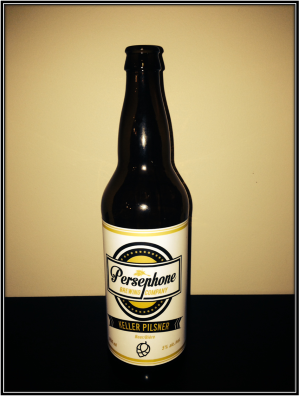
A brown glass bottle with a white and gold label reading Persephone Keller Pilsner, standing on a black surface against a cream wall

Persephone Brewing in Gibsons entered the list with its Keller Pilsner, an unfiltered, Saaz-hoppy lager the members found clean and easy but short on body, at an average of 2.6. That was a seasonal beer, and the brewery behind it is the part that has changed most since: Persephone is still open and was publicly listed for sale in July 2026, with closure possible if no buyer is found, which is the sort of thing a 2014 review could not have known and a reader should check before planning a trip to Gibsons.

A brown glass bottle with a cream and green label reading Hoyner Pilsner, on a black surface against a cream wall with its reflection below it

The top score of the evening went to the Hoyner Pilsner from Hoyne Brewing in Victoria, at 3.5, and the bottle carried the brewery's printed scale for colour, hops and malt, which the members liked because it told them what they were buying before they opened it. Hoyne is still brewing in Victoria and has been expanding, with its first dedicated tasting room announced for 2026.

A dark glass bottle with a label reading Banana Hammock in white script over a drawing of a banana, on a black surface against a cream wall

Parallel 49's Banana Hammock, a wheat beer brewed for banana and clove character, scored 3.3, and the write-up at the time complained that the brewery's website was under construction and left the members guessing where the beer sat in its own range. That problem is long gone: Parallel 49 is open in Vancouver, running a taproom and kitchen, with a website that has nothing under construction about it.

A dark glass bottle with a label reading Fat Tug above an illustration of a tugboat on water, on a black surface against a cream wall

The beer the group was least happy with was Fat Tug from the Driftwood Brewery, which divided the table and averaged 2.8, with one member giving it a 3.9 and another a 2.2. Driftwood's own label promises a barge load of hops in an unassuming bottle, and the divide in those four numbers is the most useful thing on this page: a heavily hopped beer is not a matter of quality, it is a matter of whether you want what it is offering. Driftwood is still brewing, having moved production to a site on Viewfield Road in Esquimalt.

Beer, scored in 2014KyleTimMikeMattAverage
Keller Pilsner, Persephone2.72.52.62.52.6
Hoyner Pilsner, Hoyne3.83.53.72.83.5
Banana Hammock, Parallel 493.13.73.53.03.3
Fat Tug, Driftwood2.52.22.43.92.8

Those scores are more than a decade old and are kept as a record rather than as advice, and the beers in that table should not be treated as a shopping list without checking what each brewery is doing now. Whether you follow the council religiously or take it with a grain of salt, the offer is the same one that was made at the start: this is where a few people write down what they thought, and the map of what has been tried keeps growing.