
Four bottles went on the table at the Council's fourth meeting, and the honest summary is that three of them were good beer and one was a disappointment the group refused to inflate. Dageraad's Randonneur Saison from Burnaby took 3.9 out of 5, Parallel 49's Snap, Crackle, Hop from Vancouver took 3.8, Steamworks Wheat Ale took 3.3, and Pray for Snow, a winter ale from Oregon, finished at 2.7, which the notes called a generous number at the time and nobody raised afterwards. Choosing four bottles that four people will disagree about is the easy half of a night like this. Writing the disagreement down is the part that is not easy.
The rules were the ones the group has kept since the first meeting. Each member brings one beer, everybody tastes before anybody argues, and a score goes on the sheet once and cannot be revised afterwards. There were four tasters that evening, which is why the columns below are worth as much reading as the averages: the wheat ale ran from 4.0 at one end of the table to 2.8 at the other, while the four numbers on the saison sat inside a single point of each other.
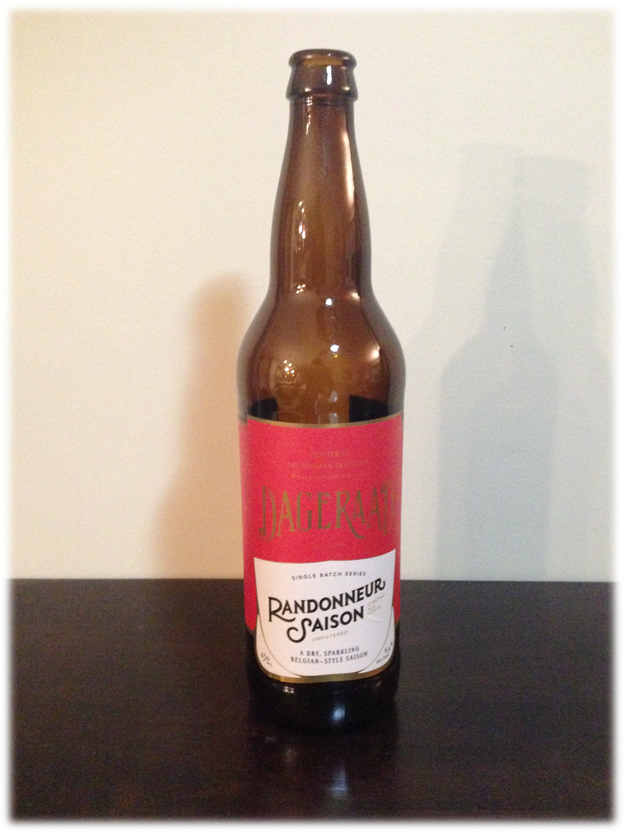
Randonneur Saison, Dageraad Brewing, Burnaby
Kyle's pick was the second release in Dageraad's Single Batch Series: unfiltered, bottle conditioned, and labelled in one line as a dry, sparkling Belgian-style saison. The brewery's suggestion at the time was seafood or salad, and the table agreed on the seafood half. Peppery, hoppy and bone dry, with enough carbonation behind it to make the finish feel like something out of a soda fountain, it was the best beer of the night and still finished with a 3.9 average, much to the chagrin of the man who brought it. Kyle's own line was that it may not be the season for saison, but it was incredible, and his 4.3 was the second highest number anybody wrote down that evening.
One style note belongs beside this bottle, because the sheet got it backwards and a BC reader will notice. A gose is not a Belgian farmhouse ale. It is a German wheat beer, soured in the kettle and usually seasoned with salt and coriander, and the Belgian farmhouse beer in that comparison is the saison itself, exactly as Dageraad prints it on the label. The mix-up is a forgivable one from a table, since both beers are pale, dry and heavily carbonated, but the sourness in a gose comes from bacteria while the pepper in a saison comes from the yeast, and that difference is the whole reason the two taste nothing alike.
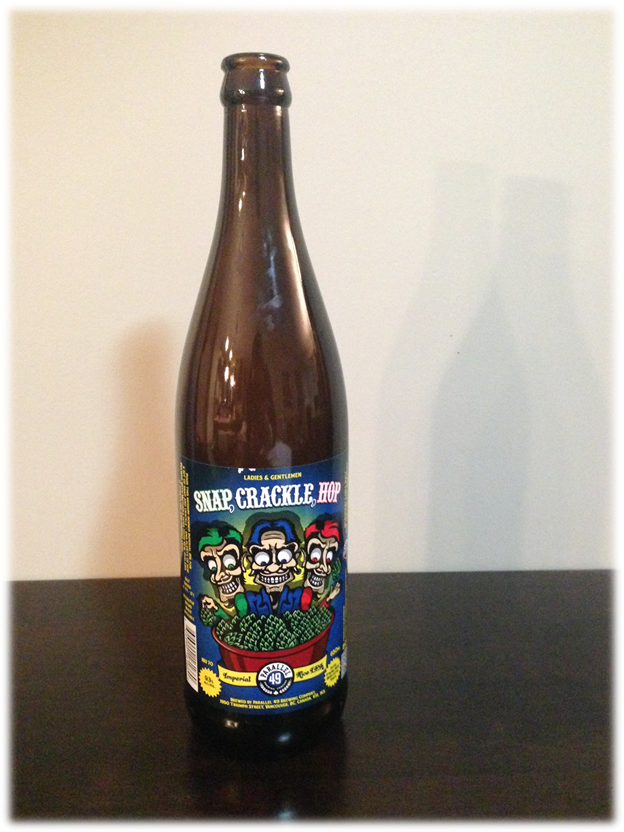
Snap, Crackle, Hop, Parallel 49 Brewing, Vancouver
Matt's pick was an imperial IPA brewed with flaked rice to keep the body light and push the New Zealand Motueka hops out in front, and the brewery put the alcohol at 9.3 percent, which the label repeats on the band under the three cartoon heads. Peach and mango arrived first, then a caramel layer and a hop bite that stayed put, and the rice did what the brewery said it would by adding dryness rather than a new flavour. The group's own warning was that a few of these will make the walk home difficult, written down by people who fully intended to ignore it. The average came to 3.8, with Matt's 4.4 the highest score he had given any beer to that point and nobody else getting above 3.8.
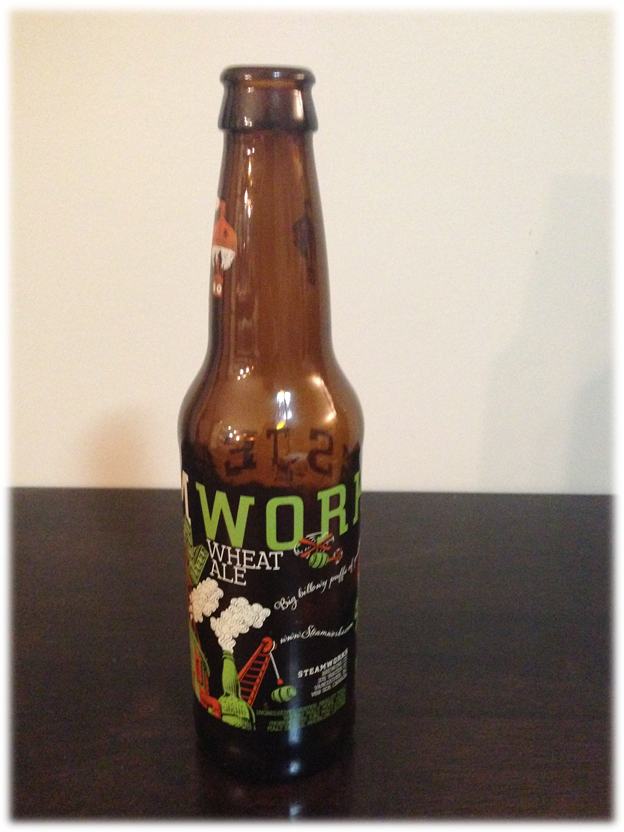
Wheat Ale, Steamworks Brewing, Burnaby
Mike brought the bottle that started the argument, and the argument was with the front label. He had been through the brewery more than once, so he knew what he was buying and the rest of the table did not. The beer is called Wheat Ale, and Steamworks' own description of it says South German style hefeweizen, which is the same thing said more precisely: hazy gold, thick white head, banana, clove and a hint of bubblegum. The group found the banana, the yeast and a spice edge, agreed it was a decent beer, and then disagreed about everything else. It finished at 3.3 with the widest spread of the night, Kyle at 4.0 and Tim at 2.8, which is what happens when four people taste for the beer they each wanted. Mike's own verdict was that Steamworks turns his crank, printed beside his own 3.3. The brewery grew out of a Gastown pub and has run its brewhouse in Burnaby since 2013, so the city on this sheet is years out of date.

Pray for Snow Winter Ale, 10 Barrel Brewing, Oregon
Tim picked a winter seasonal at 7 percent and the table could not rescue it. The pour was dark amber browning at the edges and looked full-bodied before it hit the tongue, and the sweetness arrived as syrup rather than caramel, with a heavy finish that most of the room expected to pay for the next morning. The average was 2.7, described in the notes as generous, and Tim's line was that if this is what winter has to offer then he is not praying for snow. Whether the beer still exists anywhere is a fair question and not one a sheet from 2014 can answer.
Two facts belong beside that score. The brewery is from Bend rather than Portland, and it was sold to Anheuser-Busch InBev in October 2014, the autumn this bottle was poured, which is the kind of change that turns a craft recommendation into a different product wearing the same name. All About Beer reported it at the time.
The Scores From That Night
Four tasters, four beers, one sitting, and no revisions after the fact. The averages are the ones quoted above, and the columns are where the night actually lives.
| Beer | Kyle | Tim | Mike | Matt | Average |
|---|---|---|---|---|---|
| Randonneur Saison, Dageraad | 4.3 | 4.2 | 3.6 | 3.4 | 3.9 |
| Snap, Crackle, Hop, Parallel 49 | 3.6 | 3.8 | 3.4 | 4.4 | 3.8 |
| Wheat Ale, Steamworks | 4.0 | 2.8 | 3.3 | 2.9 | 3.3 |
| Pray for Snow, 10 Barrel | 2.7 | 2.3 | 2.1 | 3.0 | 2.7 |
Where These Breweries Stand
Dageraad is still brewing in Burnaby, which makes the saison the one bottle here that a reader can still go and find from the brewery that made it, if the Single Batch Series has moved on since. Parallel 49 was last confirmed operating in Vancouver in 2025. Steamworks still runs the Burnaby brewhouse that grew out of its Gastown pub. 10 Barrel has changed hands, and a winter seasonal from 2014 is not a shopping tip. The Council ran the same format again at its New Year meeting, written up as the New Year tasting, where a golden ale brewed with pears took 4.3 and a strong Belgian-style tripel split one taster from three.
Why The Low Score Is The Useful One
The 3.9 and the 3.8 will age well, because in both cases the brewery said plainly what the beer was and the table found it. The 2.7 is the entry worth keeping. A group that had already handed out three respectable numbers that evening could have written a kind line about an Oregon winter ale and nobody would have blinked, and instead they printed the number they meant and labelled it generous in the same breath. If you keep a tasting sheet with friends, copy that habit rather than the scores: write one line per beer before the conversation starts, keep the spread visible next to the average, and leave the low numbers in place, because a low number is the only part of the sheet that tells a reader something the writer did not already have to believe.


